health /
Intravenous: Intermittent Infusion (IV Piggyback): Pump Infusion
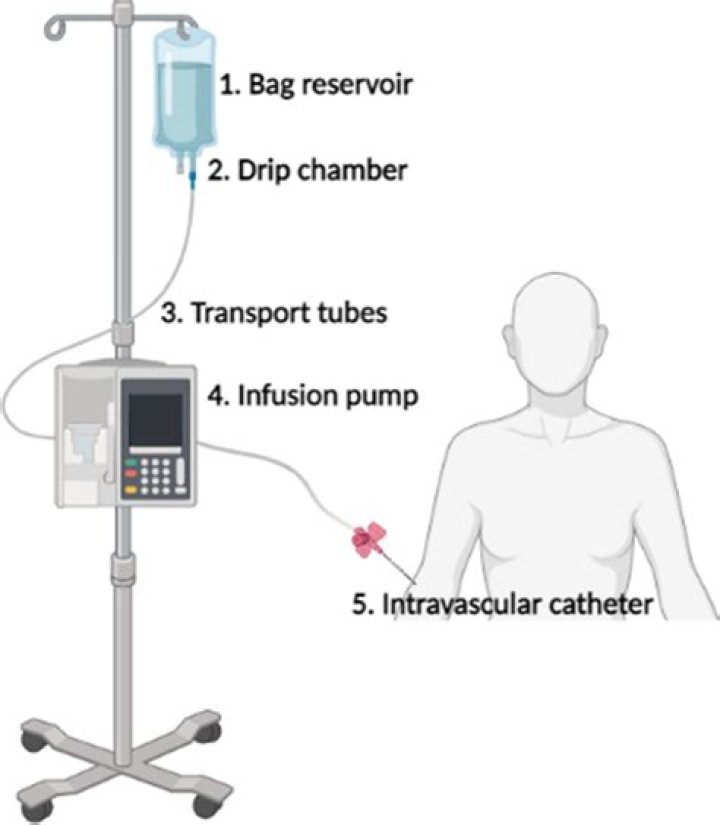
Intravenous: Intermittent Infusion (IV Piggyback): Pump Infusion
Prerequisite Skills
Safe medication administration; aseptic technique
Critical Element Criteria
Students must meet criteria of Critical Elements to safely perform the skill based on evidence-based practice. Score can be pass/fail, letter grade, or point assignment. Only acceptable score for Critical Elements is 100%
Critical Elements
- Prepare medication for one patient at a time.
- Assess the IV site for the presence of inflammation or infiltration.
- Calculate, accurately, the rate of administration, confirming safe dose range.
- Verbalize potential adverse effects and any monitoring requirements.
- Perform 3 checks for safe medication administration.
- Utilize 2 patient identifiers.
- Evaluate patient allergies.
Procedure
Prior to Treatment: (Critical Thinking)
- Assess patients need for treatment.
- Confirm order.
- Gather equipment: IV medication, medication administration reacord (MAR), labels for tubing, alcohol wipes, IV pump, extension hook. If necessary: clean gloves.
Patient Interaction: (Safety)
- Patient identifiers.
- Provide for privacy.
- Explain procedure.
- Confirm allergies.
- Wash hands.
Steps of the Procedure: (Safety)
- Confirm medication compatibility if appropriate.
- Assess IV site.
- Inspect tubing dates.
- Lower empty secondary bag and open roller clamp allowing air to purge backwards into the empty bag. Close roller clamp with drip chamber on secondary tubing is about 1/3 full.
- Remove secondary bag and spike new medication bag.
- Lower main bag on extension devise.
- Program IV pump to proper rate of administration.
- Return to room when infusion if complete and confirm proper rate of primary solution.
After Procedure (Patient Centered Care)
- Straighten room making patient comfortable, replace call light.
- Wash hands before leaving room.
Documentation (Informatics, Communication)
- Assessment of insertion site.
- MAR should reflect: right patient, medication, dose, frequency, and route.
- Intake of fluid, if appropriate.
- Patient’s response to procedure.