Nathan Wirth | A Slice of Silence
"In his poem “World, World—,” George Oppen writes that “The self is no mystery, the mystery is / That there is something for us to stand on.” Oppen’s words bring to light the questions of ontology: what does it mean to be? However, his concerns are not grounded in the individual, in the self; rather, they illuminate what he feels is a far greater mystery: the fact that we are at all. Indeed, Oppen’s words recognize how utterly astonishing it is that there is anything at all— an astonishment that inevitably works its way into not only what I choose to photograph, but also how I photograph it. Much of my work is inextricably tied to my preoccupation with studying poetry as an undergraduate and graduate student—as well as the many poets that I have followed in the years that have passed since completing my degrees in English Literature. Poetry, at least the poetry I enjoy reading, is certainly a medium that expresses itself in metaphor and music, but it is also firmly grounded in an attention to the thing or things themselves. In other words, the well-tuned poet sees things as they are first and foremost, and whatever interpretation one might unravel from a poem’s rich ambiguities, those possibilities are best discovered by first understanding what those things are. In this sense, the things that I most often photograph— water, rocks, piers, bridges, birds, beaches, clouds, docks, trees— are grounded in my very real experience of them as well as the place where they are found. I tend to visit the same places over and over again always looking for a new way to capture them, to reveal them, so I can share a sense of wonder, a sense of how astonished I am that these things even are.
However, this wonder, this astonishment, is firmly grounded in an awareness of the sublime, an awareness of not only the awesomeness and the transcendent, but also the formidable and the overwhelming. So while many of my photographs express solitude, contemplation and silence, often with the absence of any human presence, in no way am I trying to express that nature is a benign, ultimately calming force in our world; on the contrary, the stillness that I often express chronicles those moments when the tumultuous forces of nature have calmed down, or in the case of my long exposure photos of the coastline— in which the tides incessantly pound and sculpt the coast— I try to capture, in those 30 seconds or more of leaving the shutter open, an eerie silent observation of that raw beauty. Still, that silence is also a major element of what I am after. It is the silence of solitude, of seeing— of actually seeing, of being aware. In other words, I hope to express a contemplative engagement with the raw, often fickle forces of nature— an engagement that I seek to express through a heightened attention to the things themselves— all of which inevitably brings me back to a poetic attention to those things.
After all, a photograph is a very thin slice of the actual thing that has been photographed."
| Increase Your Awareness If you would like more details, be sure to check out Michael's exquisite exploration of integral aesthetics: Looking at the Overlooked. |
Nathan Wirth’s photography discloses both the beauty and the sublimity of place, inviting viewers into a contemplative mode of seeing – a seeing of Silence.
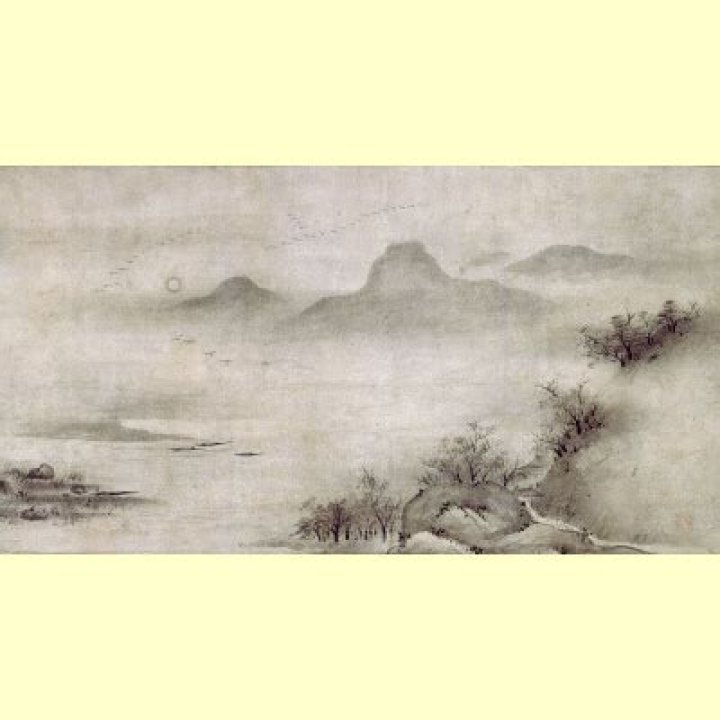
Inspired by the likes of nineteenth century aesthetic theory and its correlative modes of landscape painting, as exemplified by artists like Caspar David Friedrich and Frederic Edwin Church; as well as by the Japanese landscape tradition; modernist abstraction, as with the work of Mark Rothko; and American photography of the great outdoors, Ansel Adams being an exemplary figure, Wirth focuses for the most part on nature - especially the nature of place — where no two places are the same; and in returning to the same place, attended to with freshness of attention to the things themselves, place is oddly other, fresh, as if born anew and encountered for the first time.
Some aspects of the work penetrate stillness, calm, quiet: a shining and clarifying beauty, whispers of Silent Intelligence. Others trace the orderly chaos of an unruly nature: a humbling sublimity in the face of a Never-To-Be-Known Mystery. Beauty and sublimity are not opposed principles for Wirth – nay, in certain works they are evoked all at once: an advance then upon so much of prior artistic practice, in forwarding a more integral aesthetic.
Twentieth-century cultural critic Walter Benjamin saw the new media of film and photography as capable of unearthing an “optical unconscious,” dimensions of the visual ordinarily submerged in our acts of seeing. Using the seemingly mundane and “realist” medium of photography, Wirth’s art is an x-ray into the deepest aesthetic dimensions of the sense of sight: beauty and the sublime, intelligence and mystery, co-mingling as paradox at the core of existence.
Michael Schwartz
January 2010