Plant Operations / Pest Management
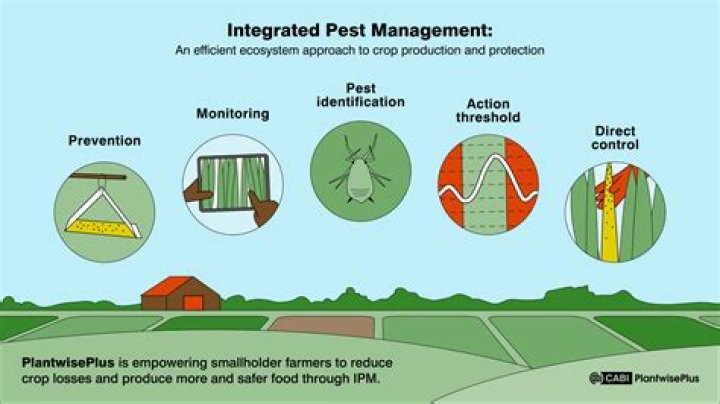
Integrated Pest Management
Arlington Public Schools uses an IPM (Integrated Pest Management) approach to pest control concerns. The typical strategies employed include: inspection, observation, staff interviews, sanitation, maintenance recommendations and monitoring activity. Arlington Public Schools uses traps and bait stations to eliminate both insect and animal pests but will also use crack and crevice treatment in gel form.
Each building receives a schedule each month indicating date and location of service. Upon arrival at the building, the pest control specialist will check in with the main office and evening custodians. The technician will inspect the following areas: exterior grounds, custodial closets, teacher’s lounge, clinic entrances, cafeteria, kitchen, all gang restrooms, work and food preparation classrooms. In addition, the pest control specialist will inspect chronic problem areas and any areas cited by the staff through the work order process. Additional areas are scheduled on a rotating basis.
Work orders are received through the computerized work order system. Emergency work orders involve any plant, insect or animal that presents an immediate threat to the safety, health of students or environment. Examples of emergencies include: rats, squirrels, bats, poison ivy, poison oak and poison sumac, termites and stinging insects and as such, are treated within 24 hours of receipt of complaint. All other items are considered non-emergency and are treated on the scheduled treatment day. Termite investigations occur as required but are treated during school holiday periods and summer break.
Human Lice 
Lice are not treated by Plant Operations. The following regarding the topic is excerpted from the National Pest Association and used with permission:
“Pest control operators are frequently asked either by individuals or organizations, to apply insecticides to surfaces to control human lice outbreaks. Accordingly there seems to be some controversy over the technician’s role in these cases. Should technicians treat premises for lice infestations? And if not, why? These are questions that will be addressed in this Technical Release. First is important to understand the characteristics of these ectoparasite insects and their medical importance….
1. House Lice, Pediculus humanus capitis (fig.1). Adults are elongate usually 1/16-1/8 inch (1.0-2. mm) long, reddish-brown in color with dark margins. Their legs are legal in length and each one has a claw to grasp the hair. Thus, head lice cannot hop, jump, or fly, they can only crawl. The immature forms (nymphs) are similar in appearance to the adults but are much smaller. The adult female is larger than the male. She glues her grayish white eggs (nits) to the hair shaft. Nits can be found anywhere on the head, including the nape of the neck, eyebrows, eyelashes, behind the ears, and at the crown.
As mentioned earlier, all three species need human blood to survive and must stay in close proximity of the host, either on the body or- in the case of the body louse-to the clothing of the infested individual. There is controversy as to how long a louse can live off the host, however it is currently believed less than 24 hours, depending on environmental conditions as relative humidity and temperature. Egg hatch generally occurs within 7-10 days, depending on environmental conditions.
Transmission
The most prevalent means of contracting a louse infestation is person-to-person contact, but they can also be indirectly transmitted by combs, brushes, towels, hats, upholstered furniture, etc. Children may pick up infestations from their parents, older siblings and from other children. The practice of sharing combs and brushes should be discouraged to avoid the transmission of head lice. Crowded conditions can cause infestations to spread and increase rapidly.
Control and the Technician
Insecticide premise treatments are not necessary since these insects cannot survive for long periods away from the human host
Body louse controls include improved individual hygiene and laundering of the individual’s clothing and bedding. All family members and other persons who may have come in recent contact with the infested individual, should be examined closely for louse infestation by a physician or public health professional who generally recommend local application of pediculicides- to the areas of infestation.
The Center for Disease Control states the epidemiological studies indicate that most transmissions of head lice occur by direct person-to-person contact and not by person-environment-person route. For this reason, the home or school environment should not be treated with insecticides. Vacuuming will remove fallen hairs with attached nits from furniture, mattresses, rugs, stuffed animals, toys and car seats. Frequent and vigorous vacuuming should be encouraged. Laundering of hats and similar head attire will remove nits."
Source: “Human Lice” ESCPS 037113A Technical Release (excerpted), National Pest Control Association, Dunn Loring, VA © 1994
Each school will receive a pest control report indicating areas inspected, treated and infested, along with recommendations, chemicals (if any) used. Schools should keep the report on file for future reference. Plant Operations keeps all IPM reports on file to comply with state regulations.
To reach the Operations department, please call 703-228-7732.